


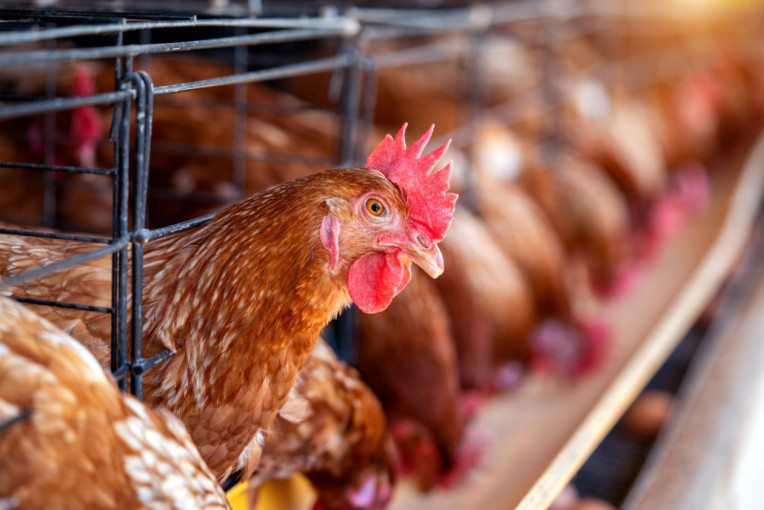
Global geopolitical tensions and climate change may affect the availability of national food supplies. Although the government has prioritized achieving food and energy self-sufficiency, it is currently strengthening the livestock industry, which is expected to support the availability of animal protein sources such as meat, eggs, and milk for the Free Nutritious Meals (MBG) program.
“We aim to increase the availability of various animal protein sources, including meat, and to encourage greater investment in the poultry industry,” said Minister of Agriculture’s Expert Staff, Professor Ali Agus, as the keynote speaker at the national seminar titled “Poultry Outlook 2026–2027: Resilience and Sovereignty of the National Poultry Industry for Food Stability Amid Import Policy Dynamics, Strategic Investment, and Strengthening Veterinary Systems” at the auditorium of the Faculty of Veterinary Medicine UGM (FKH UGM) on Wednesday (Apr. 22).
According to Professor Agus, Indonesia’s livestock industry, particularly the poultry sector, is among the best in the world in terms of price stability for eggs and chicken meat. However, distribution remains uneven, with 63 percent still concentrated on Java Island.
“Distribution is still centered on Java,” he said.

To improve distributional equity, the government is implementing strategies to enhance the poultry sector’s quality by restructuring distribution patterns so that each island can achieve food and protein self-sufficiency and minimize the risks of logistical disruptions and disease outbreaks, such as foot-and-mouth disease (FMD) and avian influenza.
In addition, the government is encouraging state-owned enterprises to stabilize prices and stocks while providing post-harvest infrastructure, such as cold storage and corn-drying facilities.
“Going forward, every island must be self-sufficient in animal protein. We are also strengthening the ecosystem through Presidential and Government Instructions in 2026 to build storage warehouses and corn drying facilities to keep feed prices under control,” he explained.
Chairman of the Indonesian Poultry Breeding Companies Association, Achmad Dawami, said that chicken and egg commodities are not merely business products but also a strategic infrastructure for strengthening the nation’s protein security.
He noted that two-thirds of Indonesians’ protein consumption comes from poultry. However, the sector often faces imbalances between supply and demand, triggering supply instability.
“Changes from breeding to distribution will directly impact supply prices and competitiveness,” Achmad explained.

The high demand for chicken meat and eggs is expected to increase further with the implementation of the MBG program. Chairman of the Indonesian People’s Poultry Association (Pinsar), Singgih Januratmoko, explained that the program is projected to increase demand for chicken meat by around 40,000 tons per month. According to him, the program can encourage students to consume animal protein from an early age.
Nevertheless, he highlighted rising production costs, while market selling prices remain less favorable for farmers and poultry industry players. Therefore, he called for revisions to existing laws to better regulate the roles of smallholder farms, breeding, and partnerships to ensure fairness. In addition, one major issue in the poultry sector is the lack of farmer regeneration.
“The younger generation tends to be more interested in finance or stocks rather than directly managing farms. The government needs strategies to address this issue, such as improving technology or promoting pricing policies that protect farmers through regulatory reforms,” he said.

Meanwhile, Professor Michael Haryadi Wibowo, Professor of Microbiology at FKH UGM, stated that several challenges in developing the poultry industry include management issues, low pullet quality, potential disease risks, and pathogen excretion into the environment. Therefore, it is necessary to strengthen education for small-scale farmers on poultry management and health, including pullets (young hens) and the laying period.
“Standard operating procedures (SOPs), particularly for biosecurity before and after pullet placement, are essential,” he said.
To prevent the spread of diseases that can cause mass mortality in poultry, he advised farmers to routinely vaccinate against Newcastle Disease (ND), Infectious Bronchitis (IB), Avian Influenza (AI), and Marek’s Disease.
Author: Fatihah Salwa Rasyid
Editor: Gusti Grehenson
Post-editor: Jasmine Ferdian
Photo: Salwa and Freepik