


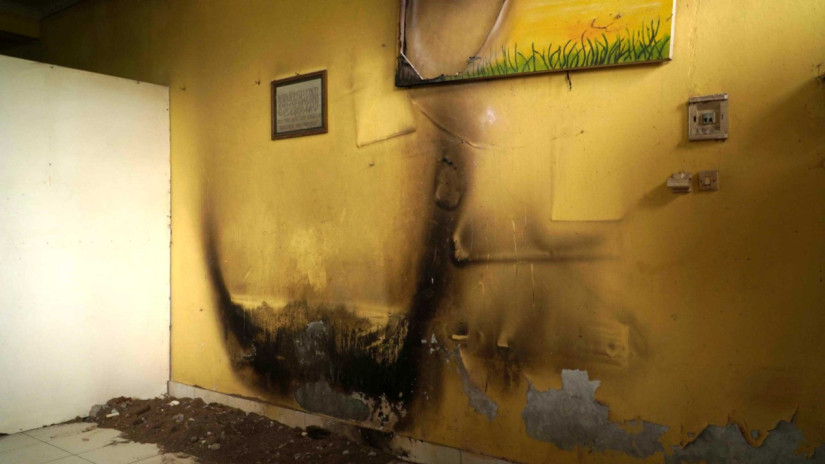
The appearance of dozens of fire spots inside a resident’s home in Seyegan, Sleman Regency, Special Region of Yogyakarta, recently drew the attention of experts and researchers from Universitas Gadjah Mada (UGM) who are affiliated with the Entropy Deceleration Research Center (PKPE) at the Faculty of Engineering (FT UGM).
Last weekend, the team visited the site to determine the exact cause of the phenomenon. After conducting three rounds of observation, laboratory test results indicated that hydrogen gas was the primary trigger, generated through the fermentation process of organic waste from poultry slaughtering activities.
The PKPE UGM team, led by Professor Alva Edy Tontowi, stated that hydrogen was identified as the main triggering gas after the team discovered a burned shirt at one of the fire locations during the second observation on Monday (Jun. 1). The concentration of hydrogen detected at the site where the shirt caught fire was exceptionally high, reaching 0.40.
“The team also found hydrogen accumulation in the bathroom at a concentration of 0.11, which is considered relatively high,” he said on Friday (Jun. 5).
Based on this preliminary finding, the team collected water samples during the second observation from several sources, including pipeline flows, wells, and household wastewater. The effort was intended to determine the accumulation of hydrogen gas generated by the wastewater.
“The team believes the key to identifying the cause is understanding the gas, which is strongly suspected to originate from liquid waste or subsurface gases associated with poultry slaughtering activities,” Professor Tontowi explained.
Laboratory testing is still ongoing to further investigate the factors contributing to the emergence of the fire spots. On Thursday (Jun. 4), the team conducted shallow excavations at several locations to measure the presence of hydrogen gas. In addition to hydrogen, the researchers hypothesized that phosphine gas, originating from phosphate-rich materials such as chicken bones and feathers, may have contributed to the fires when released alongside hydrogen.
It is also possible that another gas with a lower ignition temperature than hydrogen, namely phosphine (PH₃), was present. This gas is believed to form from phosphate-rich materials such as bones and the hard parts of chicken feathers.
“Unfortunately, phosphine is difficult to detect and is quickly consumed when it reacts with oxygen. Phosphine likely triggered the ignition of hydrogen gas when both gases were released simultaneously,” he said.
While awaiting further laboratory analysis to determine the source of gases in liquid waste, the PKPE team at the FT UGM has recommended several measures to reduce the risk of further gas accumulation. The team advised maximizing air circulation inside the house by keeping openings fully ventilated and installing fans to prevent gas seepage from accumulating to combustible concentrations. The researchers also recommended that the homeowner remove flammable materials from the house.
“The UGM team will assist in saturating the soil and house flooring with an alkaline solution (lime water) to reduce the possibility of Clostridium bacteria, which may play a role in producing hydrogen gas,” Professor Tontowi concluded.
Author: Ika Agustine
Editor: Gusti Grehenson
Post-editor: Rajendra Arya
Photo: Faculty of Engineering UGM Public Relations Documentation