


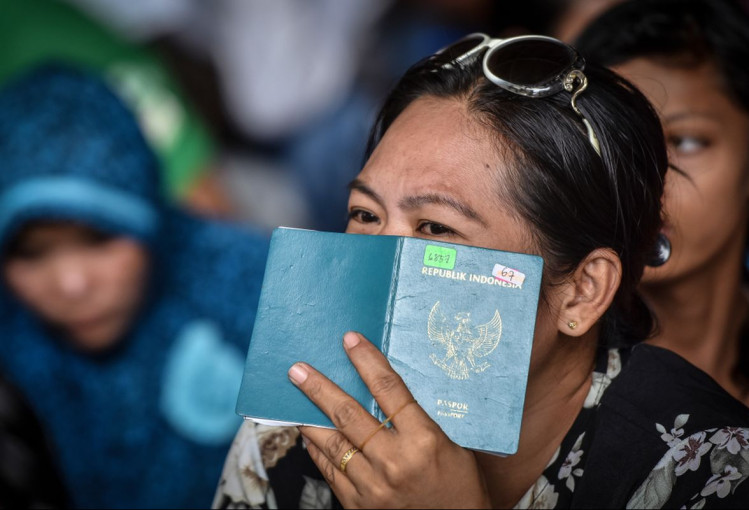
In this era of globalization, national boundaries are becoming increasingly abstract, while the growing openness of information has led to greater cross-border mobility. Each year, migration continues to rise, particularly among Indonesian migrant workers. Several key issues remain, including the limited understanding among migrant workers of regulations in both their home and destination countries. This lack of knowledge has contributed to numerous cases of overstaying in destination countries. Other issues include the use of non-procedural or illegal documents, as well as job placements that do not align with agreements made with recruitment agencies.
From a criminal law perspective, the complexity of cases involving Indonesian migrant workers stems from various factors, including limited employment opportunities and low levels of education. A Criminal Law lecturer at the UGM Faculty of Law (FH UGM), Sri Wiyanti Eddyono, Ph.D., emphasized that the right to work must be upheld, respected, and guaranteed by the state, which must also ensure equal opportunities and protection for all citizens without discrimination.
“Indonesian migrant workers must be protected from human trafficking, slavery and forced labor, violence, arbitrariness, crimes against human dignity, and other forms of treatment that violate human rights,” she explained in a statement issued on Thursday (Apr. 30) following the webinar on Optimalisasi Perlindungan Pekerja Migran Indonesia melalui Edukasi Hukum dan Pemahaman Prosedur Keberangkatan (Optimizing the Protection of Indonesian Migrant Workers through Legal Education and Understanding of Departure Procedures).
She added that, under the law, the state is obligated to improve the overall protection system for Indonesian migrant workers and their families, reflecting humanitarian values and national dignity, starting from before employment, during employment, and after employment.
A Labor Law lecturer at FH UGM, Nabiyla Risfa Izzati, Ph.D., emphasized that Law No. 18 of 2017 stipulates that protection for migrant workers cannot be limited to the period of employment. Instead, pre-employment protection is crucial in ensuring the safety of migrant workers. Likewise, post-employment protection is essential, given the needs that arise when migrant workers return to Indonesia.
Nevertheless, migrant workers face specific vulnerabilities that require targeted protection after employment. Although the law provides a relatively comprehensive framework for protecting migrant workers,
“There are still issues that cannot yet be fully resolved through the existence of this law,” she noted.
To protect migrant workers from various risks, the government must not only respond to cases but also ensure protection before, during, and after employment. This includes implementing preventive measures through better governance of migrant worker systems and adequate preparation, including knowledge of both national and destination-country laws.
“Indonesian embassies, as institutions responsible for protecting migrant workers, play a role in providing legal assistance, facilitating communication, and ensuring the repatriation of migrant workers,” she explained.
However, these efforts continue to face multiple challenges, ranging from issues with the accuracy of migration data and governance to suboptimal law enforcement. In response, Judha proposed several measures to improve governance of migrant workers, including accelerating digital transformation, standardizing services, strengthening governance of safe migration, reinforcing law enforcement, and increasing investment in preventive efforts.
“With collaboration among all stakeholders, we hope that the protection of Indonesian migrant workers can be effectively realized,” he stated.
The Ambassador of the Republic of Indonesia to the United Arab Emirates, Judha Nugraha, explained that many Indonesian migrant workers depart for the UAE without following proper procedures and end up committing immigration violations upon arrival. He stressed that immigration issues are not merely administrative problems but can serve as entry points to more complex cases, including human trafficking.
“Immigration-related cases remain one of the primary challenges,” he said.
Author: Fatihah Salwa Rasyid
Editor: Gusti Grehenson
Post-editor: Zabrina Kumara
Photo: Shutterstock