


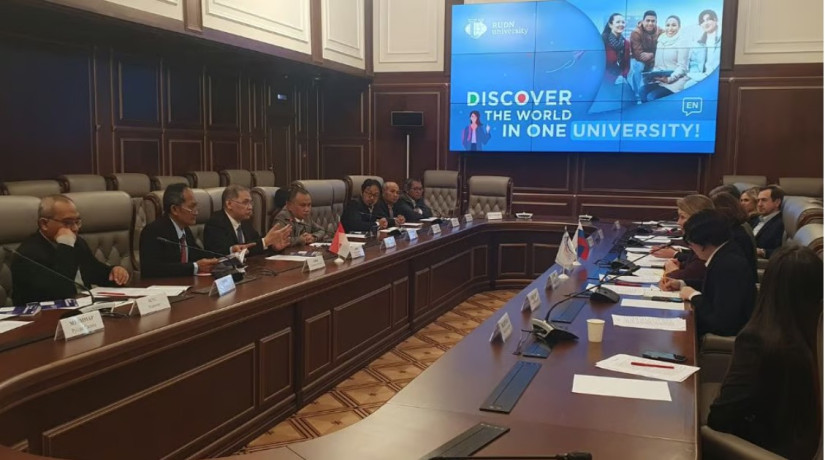
The rapid advancement of Artificial Intelligence (AI) requires information technology experts worldwide to remain vigilant. Cross-sector collaboration among governments, industries, and educational institutions must be strengthened to create a research ecosystem that supports cybersecurity innovation. Since 2025, Universitas Gadjah Mada (UGM) has initiated cooperation with Positive Technologies, a Russian cybersecurity research and solutions company. In 2026, this initiative encouraged several Indonesian universities to establish similar partnerships.
As the largest country in Southeast Asia, Indonesia possesses tremendous talent potential. During the International Economic Forum “Russia-Islamic World: Kazan Forum”, held on May 12 to 17, 2026, Positive Technologies signed cooperation agreements with six Indonesian universities: Universitas Brawijaya (UB), Universitas Pendidikan Indonesia (UPI), Bandung Manufacturing Polytechnic (Polman), Mandala Institute of Technology and Science (ITSM), and Universitas Darul Ma’arif (UDM). One year earlier, through the Russian Federal Agency for International Humanitarian Cooperation (Rossotrudnichestvo), Universitas Gadjah Mada and Universitas Padjadjaran had already signed similar agreements.
Based in Russia, Positive Technologies has grown into a cybersecurity consulting company known for its technological independence and robust internal protection systems. Specializing in cyber defense and response solutions, the company is committed to establishing strategic partnerships with educational institutions.
“Our partnerships with Indonesian universities demonstrate Positive Technologies’ commitment to sharing global expertise and strengthening the cybersecurity professional community in Southeast Asia,” said Elena Grishaeva, Southeast Asia Regional Director of Positive Technologies.
According to Grishaeva, developing a highly skilled workforce is the foundation of genuine cyber resilience at the corporate, industry, and national levels.
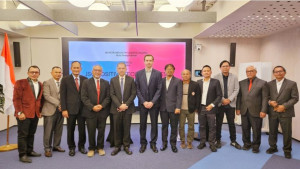
Welcoming Positive Technologies’ commitment to developing Indonesia’s cybersecurity workforce, UGM Vice Rector for Planning, Assets, and Information Systems, Dr. Arief Setiawan Budi Nugroho, expressed support for the collaboration established last year, which opens opportunities for student exchanges, faculty exchanges, joint research and development, and double-degree education programs.
“These opportunities will certainly be discussed further so that they can be formulated more concretely and provide tangible benefits for strengthening academic capacity, research, and cybersecurity talent development in Indonesia,” said Dr. Nugroho.
Dr. Nugroho noted that UGM has consistently demonstrated a strong track record of collaboration. From July to August 2025, UGM students participated in Positive Hack Camp in Moscow, an intensive program that brought Indonesian students together with top talents from around the world.
Subsequently, on October 13, 2025, Positive Technologies visited UGM to discuss curriculum development, international internship programs, digital research collaboration, and the blueprint for establishing a Cybersecurity Center of Excellence, a hub designed to connect Indonesian academics with the global cybersecurity industry.
In November 2025, Positive Technologies Managing Director and Cybersecurity Business Consultant Alexey Lukatsky visited UGM and delivered a public lecture to students of the Faculty of Mathematics and Natural Sciences on the growing threats posed by Artificial Intelligence in digital security.
According to Dr. Nugroho, the partnership provides UGM with valuable benchmarking opportunities to prepare human resources capable of addressing digital challenges on the international stage.
“UGM’s commitment to creating a tech-savvy learning ecosystem for students is being advanced through collaborations with various partners, including the global cybersecurity industry,” he concluded.
Author: Ika Agustine
Editor: Gusti Grehenson
Post-editor: Rajendra Arya
Photo: Positive Technologies Documentation