


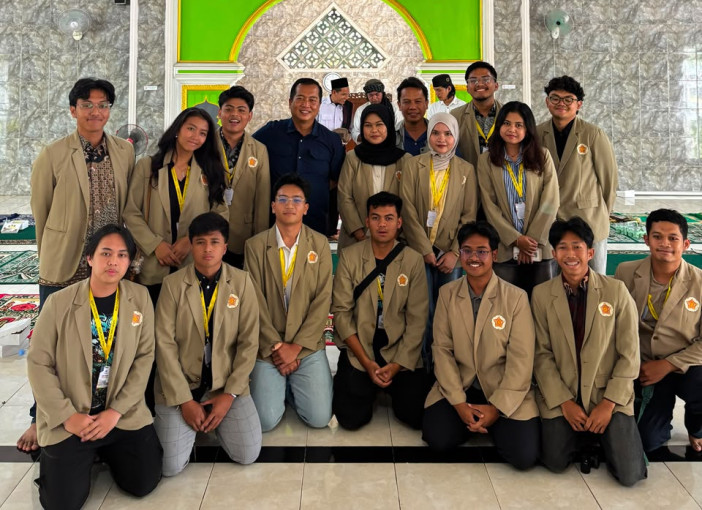
West Nusa Tenggara (NTB) Governor Lalu Muhamad Iqbal paid a working visit to Sengkol Village, Pujut District, Central Lombok Regency, on Monday (July 27). During the visit, the governor held an interactive dialogue at Raudhatul Maujud Mosque. The meeting served as a strategic forum to hear firsthand about the challenges faced by the local community and gather input from the UGM Mahitala Mandalika Community Service Program (KKN-PPM UGM) team, which is currently carrying out community engagement activities in the area.
The dialogue took place in a warm and enthusiastic atmosphere. Various community representatives attended, including mosque youth groups, community leaders, village and district officials, and residents of Sengkol Village and surrounding areas. Students participating in community service programs from several universities were also present, including UIN Mataram, the University of Mataram, UNU Mataram, and UGM.
The discussion became particularly dynamic when the UGM Mahitala Mandalika KKN-PPM team, which has been conducting community service for about five weeks and will continue until it completes a full 50-day program, presented the results of its comprehensive field observations.
In the tourism sector, the backbone of Central Lombok’s economy, the team highlighted the importance of improving English language proficiency among local workers.
“This issue of human resource quality has become one of the primary focuses of the students’ research to formulate targeted capacity-building strategies,” said UGM KKN-PPM Field Supervisor Dr. Ahmad Agus Setiawan in a statement released on Wednesday (July 29).
In the Micro, Small, and Medium Enterprises (MSME) sector, the students found that the community’s digital adaptation remains limited. Local MSME owners still rarely use digital payment systems such as QRIS and social media to expand market reach.
In the health sector, the KKN team identified a paradox. Although Sengkol Village is supported by adequate, high-standard healthcare facilities, including Mandalika Hospital, community health centers, and integrated health service posts (Posyandu), the availability of these facilities has not been matched by sufficient public awareness and understanding of health issues.
“Based on our field findings, there are indications of a high potential for underdiagnosed diseases due to the community’s limited initiative to proactively access healthcare services,” Agus explained.
The team’s presentation also covered conditions in Sukadana Village. In the agricultural sector, farming practices continue to be dominated by monoculture systems, with most farmland planted exclusively with corn. If this pattern continues, it could lead to long-term soil degradation.
Meanwhile, in the education sector, the KKN team identified several persistent challenges. Students’ learning motivation and reading interest remain relatively low, compounded by limited educational facilities and supporting infrastructure, some of which are in poor condition. In addition, several schools still lack adequate guidance and support to help students pursue higher education or prepare for future careers.
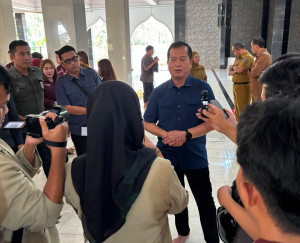
Based on these findings, UGM Mahitala Mandalika KKN-PPM Unit Student Coordinator Dzaki Sentanu Nuragusta reaffirmed the team’s commitment to implementing community service programs centered on capacity building. Rather than focusing solely on producing tangible or visible outputs, the programs are designed to strengthen community capabilities.
By addressing challenges across multiple sectors, the UGM KKN-PPM team seeks to cultivate communities with greater awareness, knowledge, and capacity for innovation.
“By instilling these values, we hope that every program initiated during the KKN period will continue to grow sustainably even after the program ends, ultimately contributing to an independent, empowered, and prosperous Pujut community,” he said.
Governor Lalu Muhamad Iqbal expressed his appreciation to the UGM students conducting their community service program in Central Lombok. According to him, the success of a KKN program should not be measured solely by the number of activities carried out, but by the lasting impact it leaves on the community.
“Congratulations to all students participating in the KKN program in Central Lombok. I hope your work creates meaningful impacts and helps identify the challenges faced by local communities. That alone is already a valuable contribution to West Nusa Tenggara,” he remarked.
Governor Iqbal also emphasized that the NTB Provincial Government remains open to the findings and recommendations generated by students during their community service. He noted that the observations collected in the field could serve as valuable references for shaping future development policies.
“We welcome any valuable findings that can be followed up in the future. There is still much that needs to be improved, but lasting progress requires a strong foundation. The presence of UGM KKN students helps us build the social foundation needed for future development,” he concluded.
Author: Cyntia Noviana
Editor: Gusti Grehenson
Post-Editor: Priyanandaningrat
Photo: Documentation of KKN Team