


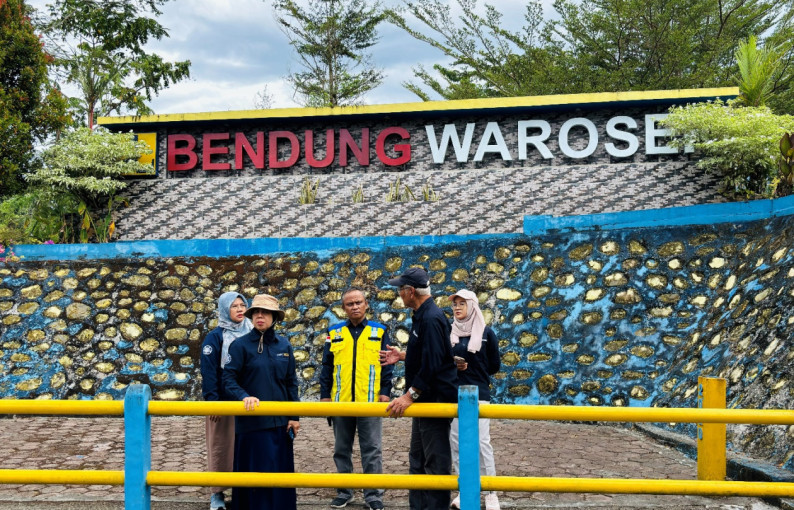
The Faculty of Agricultural Technology at Universitas Gadjah Mada (FTP UGM) has begun developing a digital monitoring system for the Oransbari Irrigation Area in South Manokwari Regency, West Papua. Developed in collaboration with the West Papua River Basin Agency (BWS Papua Barat), the innovation is expected to improve the effectiveness of irrigation network management through digital technology. The initiative was officially launched with a kick-off meeting and the signing of a cooperation agreement at the West Papua River Basin Agency office on Saturday (July 18), marking the start of the 2026 Oransbari Irrigation Area Digital Monitoring Program.
The utilization of digital technology is one of the key strategies to improve the efficiency of water resource management amid increasingly complex irrigation demands. Through the system, water discharge, irrigation distribution, and network conditions can be monitored more quickly and accurately. Professor Eni Harmayani, Dean of FTP UGM, emphasized that collaboration between universities and government institutions is a crucial foundation for delivering innovations with tangible benefits for society.
“We hope this collaboration will serve as the first step toward modernizing technology-based irrigation management while strengthening synergy between universities and the government to support food security,” she said.
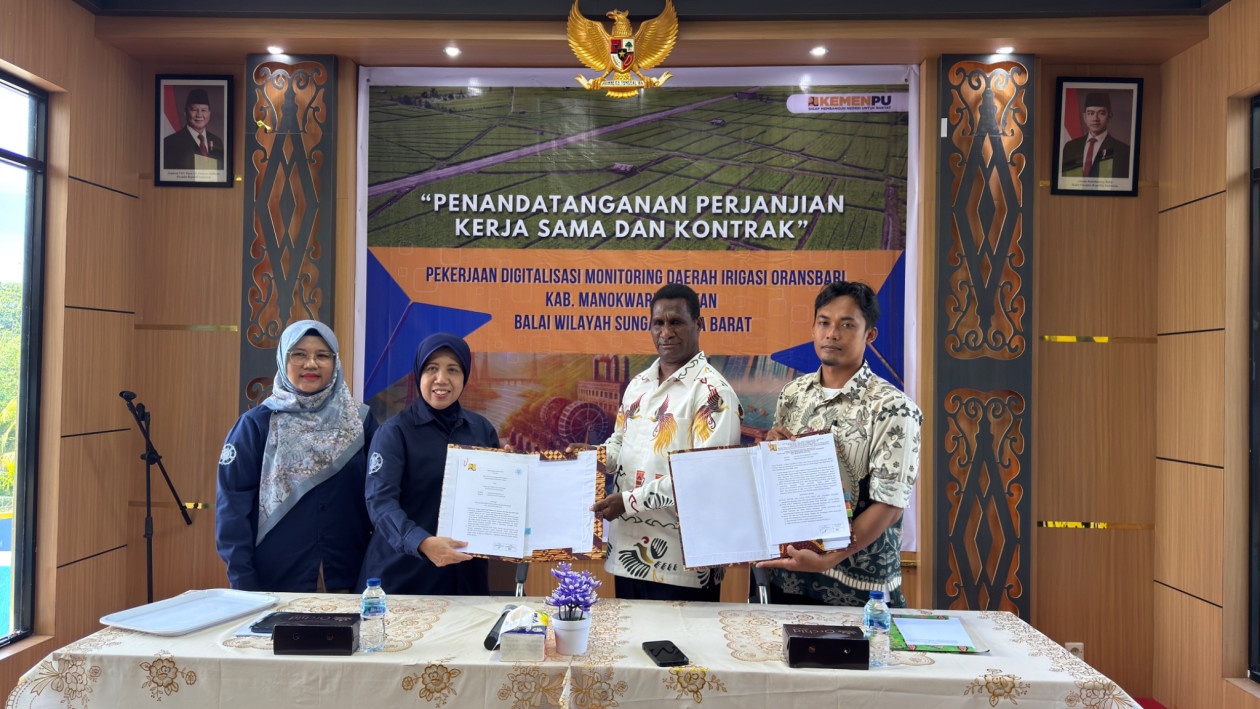
The program is also supported through coordination with various stakeholders in West Papua, including the Regional Public Works and Public Housing Office (PUPR) and the Provincial Food Crops, Horticulture, and Plantation Office. This coordination aims to align program implementation with regional water resource management policies. The local government has expressed its commitment to supporting the program by providing data, information, and other supporting facilities. Such interagency collaboration is expected to strengthen the success of irrigation modernization in the region.
As the initial phase of implementation, a team of experts from the UGM Center for Irrigation and Agricultural Modernization Studies (PKMIP) conducted a field survey in the Oransbari Irrigation Area. The survey included mapping the irrigation network from the weir to tertiary canals, identifying existing conditions, and determining suitable locations for installing digital monitoring equipment. This stage ensures that the technology developed is tailored to the area’s characteristics and irrigation management needs. The field survey provides a critical foundation before the digital system is fully implemented.
The team, coordinated by Professor Sigit Supadmo Arif together with Dr. Eng. Ansita Gupitakingkin Pradipta, also assessed the Irrigation Modernization Readiness Index (IKMI) through interviews with irrigation managers, operation and maintenance personnel, and farmers. The assessment results will serve as the basis for developing implementation strategies that reflect the readiness of both local institutions and communities. This process is expected to facilitate the adoption of the digital system while improving the effectiveness of irrigation network management.
“Digital monitoring is not simply about installing equipment; it is about ensuring that the irrigation system, institutions, and local communities are ready to adopt the technology so that water management becomes more effective and sustainable,” said Professor Sigit.
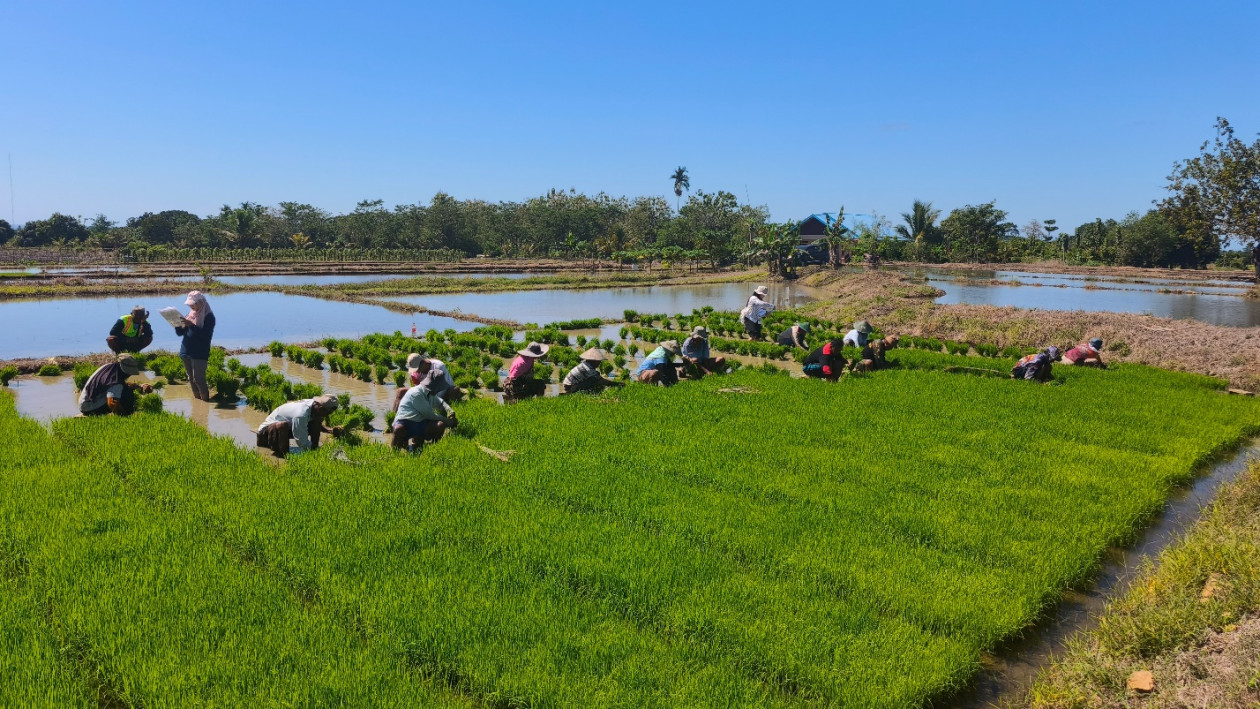
Through the digital system being developed, irrigation network conditions can be monitored more efficiently and transparently. Information on water discharge, distribution, and canal conditions will be available more quickly, allowing potential problems to be identified and addressed promptly. The availability of real-time data is also expected to help irrigation managers make more informed decisions based on actual field conditions. This data-driven approach represents an important step toward irrigation services that are increasingly adaptive to technological advances.
The irrigation modernization initiative developed by UGM encompasses the application of digital technology, institutional strengthening, governance improvement, and human resource capacity building. The Oransbari Irrigation Area Digital Monitoring Program is expected to become a model for technology-based irrigation modernization in eastern Indonesia and serve as a reference for implementing similar systems in irrigation areas with different characteristics. The collaboration between UGM and the West Papua River Basin Agency demonstrates the role of universities in providing science-based solutions to support more effective and sustainable water resource management. Through this innovation, UGM hopes irrigation modernization will enhance agricultural productivity, strengthen food security in West Papua, and contribute more broadly to Indonesia’s agricultural development.
Reporter: Faculty of Agricultural Technology Public Relations
Author: Triya Andriyani
Post-Editor: Priyanandaningrat