


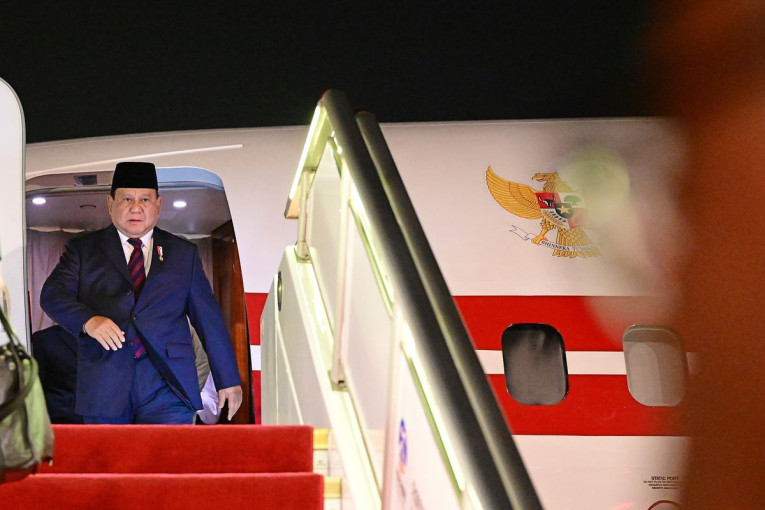
The intensity of President Prabowo Subianto’s overseas travel throughout 2025 and 2026 has drawn public attention. According to data compiled by Kompas, throughout 2025 alone, Prabowo made 34 trips to 25 countries across several continents. These official visits were undertaken as part of economic and security diplomacy efforts, resulting in commitments for foreign investment, strengthened defense cooperation, and agreements on food security. Nevertheless, the high frequency of these visits has been viewed as inconsistent with the government’s calls for efficiency and the increasingly challenging economic conditions faced by the public.
In response to this phenomenon, UGM public policy expert Dr. Subarsono, M.Si., M.A., emphasized that the high frequency of overseas travel directly imposes additional financial burdens on the state budget.
“This high frequency of visits certainly has financial implications for our state budget at a time when the government is calling for budget efficiency and reduced overseas travel,” he said on Friday (June 5).
Furthermore, Dr. Subarsono argued that the implications of these frequent overseas trips extend beyond financial costs and are closely tied to the erosion of leadership by example in the public eye. Referring to the philosophy of Ki Hajar Dewantara, he stressed that leaders are obligated to set a concrete example for both the public and government officials.
“This phenomenon can be interpreted as the President, as head of government and head of state, failing to set an example in adhering to the government’s own call for efficiency. Borrowing from Ki Hajar Dewantara’s philosophy, a leader should embody Ing ngarso sung tulodho, which means that those in front must serve as role models,” he explained.
On the other hand, Dr. Subarsono noted that the prolonged physical absence of the head of state may affect the effectiveness of oversight within government administration. He explained that, in the context of modern management, governmental control can still be optimized through the integration of information technology.
“In modern management, I believe the President can still monitor government operations and oversight through various internet-based platforms, such as Zoom meetings, international telephone calls, video conferences, and social media platforms. Of course, these methods are not as effective as direct, in-person oversight when the President is in the country. However, they can help minimize the negative impacts of the President’s absence,” he said.
As a practical measure, Dr. Subarsono encouraged the government to establish a priority scale for overseas visits, focusing on multilateral forums that would enable the President to achieve multiple diplomatic objectives within a single trip.
“Going forward, priority should ideally be given to overseas visits for highly important multilateral events. In a single foreign visit, the President could also arrange meetings with the heads of government of several participating countries in addition to attending the main event,” he explained.
Dr. Subarsono also offered a critical assessment of Cabinet Secretary Teddy Indra Wijaya’s response that any excess costs would be personally covered by the President. He viewed the statement as reactive and insufficiently mindful of its implications for public accountability.
“Such a statement appears to be a spontaneous and emotional reaction to frequent public criticism of the President. It seems that the Cabinet Secretary did not fully consider the implications of the statement, such as the possibility of the public demanding accountability for it,” he said.
More broadly, he emphasized that using personal funds to cover official expenditures is not an appropriate approach to state governance.
“It would seem inappropriate to use personal funds to cover shortfalls in official travel expenses because the public could speculate that the state is no longer financially capable or is facing a fiscal deficit. This situation could potentially create a negative image of Indonesia in the eyes of other countries,” he stressed.
To address public concerns and criticism from former Indonesian Vice Foreign Minister Dino Patti Djalal, Dr. Subarsono suggested that the government adopt a more open approach and prioritize inclusive dialogue. According to him, Dino’s extensive diplomatic experience is a valuable asset that could help improve current foreign policy.
“I believe Mr. Dino Patti Djalal has a wealth of experience from his career in the Ministry of Foreign Affairs. His input could be beneficial for the current government. The government can assess which recommendations can be accommodated and which cannot yet be implemented,” he explained. Finally, Dr. Subarsono emphasized that policymaking in today’s global environment requires a more inclusive approach and can no longer rely on a one-way process.
“Public issues, particularly those related to international relations, are complex and dynamic. Therefore, governance cannot be shaped solely by the government; it also requires input from a wide range of stakeholders,” he concluded.
Author: Hanifah
Editor: Gusti Grehenson
Post-editor: Zabrina Kumara
Photo: Kompas.com