


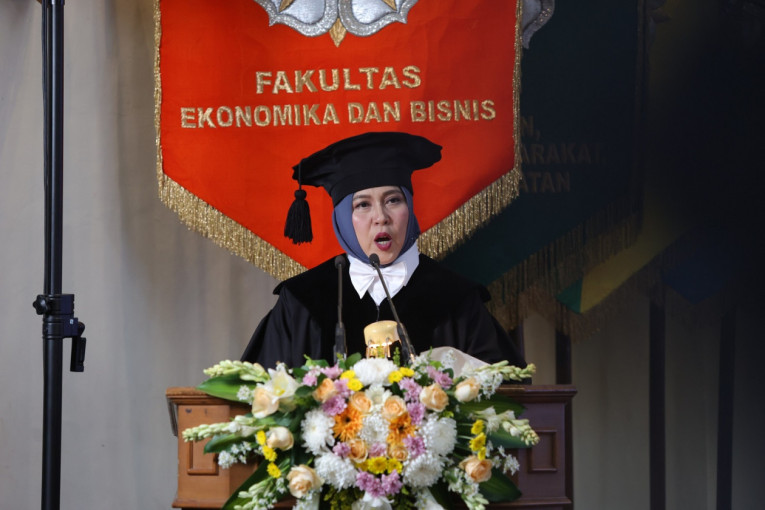
Lecturer at the Department of Management, Professor Reni Rosari, was officially inaugurated as Professor of Organizational Behavior at the Faculty of Economics and Business, Universitas Gadjah Mada (FEB UGM). During the inauguration ceremony held at the UGM Senate Hall on Thursday (Feb. 19), she delivered an inaugural speech titled Rumongso Melu Handarbeni: A Sense of Belonging as the Foundation of Happiness- and Collaboration-Based Organizations.
In her speech, she emphasized that true organizations are not built solely by structure and strategy, but by the human spirit that brings them to life. Behind every sound policy lies a caring heart, and behind every outstanding performance lies a genuine sense of belonging.
The concept of rumongso melu handarbeni, rooted in Javanese cultural wisdom, she explained, is not merely a local value but a universal reflection of humanity.
“A sense of belonging is not merely about material ownership, but about moral responsibility. It is not about possessing, but about safeguarding. Not about rights, but about responsibility, and not about ‘me,’ but about ‘us,’” she said.
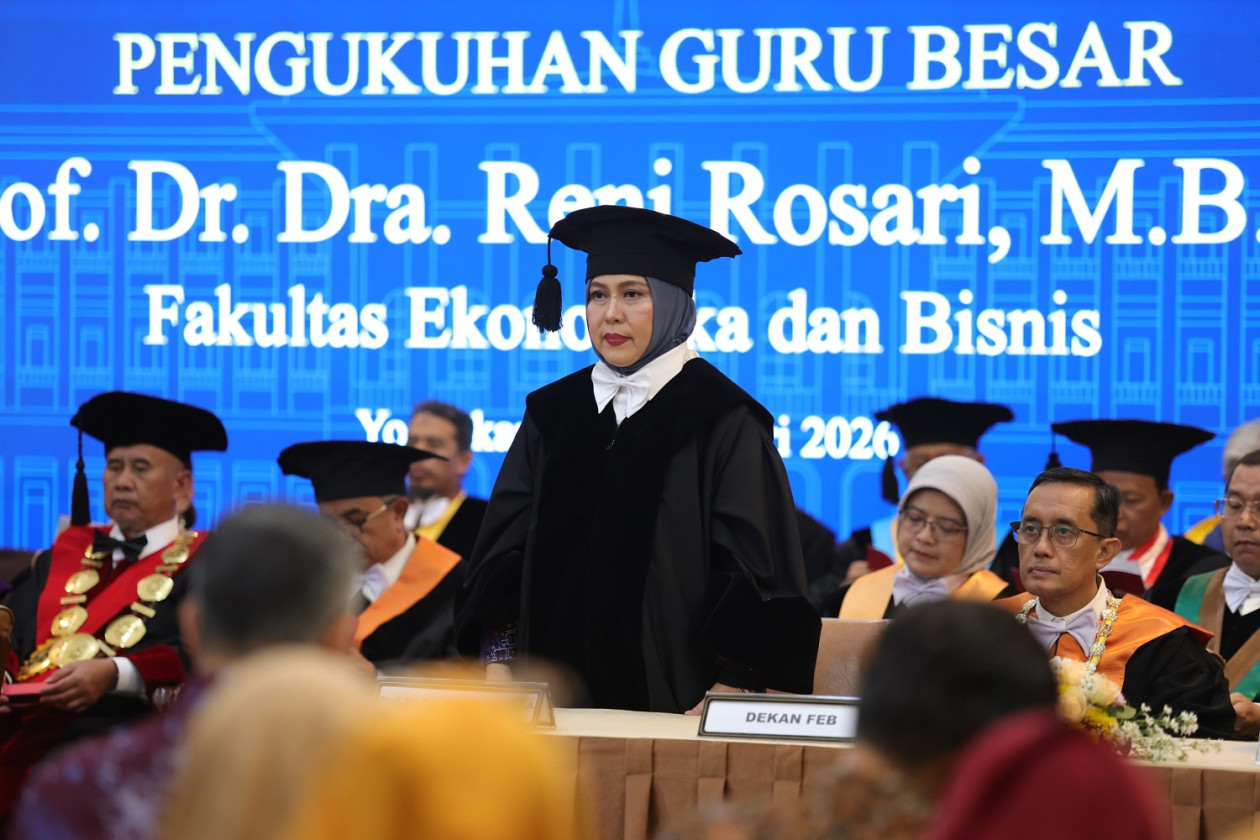
In the context of modern management and leadership, the value of rumongso melu handarbeni serves as a bridge between reason and conscience, between systems and meaning, between performance and happiness.
When organizations are built upon a sense of belonging, relationships evolve from transactional to transformational. People no longer work because they are instructed to do so, but because they no longer contribute because they must, but because they want to.
According to Professor Rosari, such organizations are organizations with a soul. They nurture rather than exhaust, empower rather than suppress, and ultimately ignite enthusiasm rather than extinguish meaning.
“Through the spirit of rumongso melu handarbeni, we are invited to cultivate a new perspective in managing people that happiness and performance are not contradictory, but mutually reinforcing. True productivity arises from individuals who feel valued, and organizational sustainability depends on how deeply people within it feel connected to one another. The sustainability of modern organizations is determined not only by systems and structures, but by the depth of human belonging within them,” she explained.
Professor Rosari observed that today’s organizations operate at increasing speed and complexity, under intense performance measurement pressures.
Yet behind achievements and efficiency, many individuals experience burnout, disengagement, and even quiet quitting. These phenomena indicate a crisis of meaning and connectedness in the workplace.
“Organizations become administratively busy, yet lose their human dimension,” she noted.
Concluding her speech, Professor Rosari reminded the audience that a true organization is one capable of igniting meaning, and thus more resilient in the long term.
Quoting the Javanese expression Urip iku urup (life is to give light), she affirmed that a meaningful life is one that kindles the lives of others.
“Likewise, a true organization lives when it is able to ignite spirit and meaning for the people within it,” she concluded.
Author: Agung Nugroho
Post-editor: Jasmine Ferdian
Photographer: Donnie