


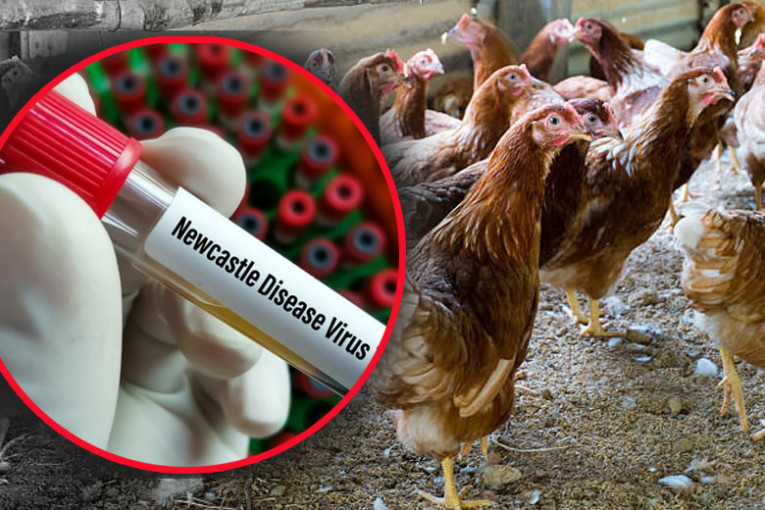
Newcastle Disease (ND), also known as tetelo, remains one of the major challenges in Indonesia’s poultry industry. Caused by Avian orthoavulavirus-1, the disease spreads rapidly and can lead to high mortality rates in poultry, particularly when triggered by virulent strains.
The disease was first identified in Indonesia in March 1926, approximately a century ago. The discovery took place in Batavia by a Dutch researcher, Kraneveld, with laboratory identification conducted in Bogor. At the time, the disease was referred to as Batavia Disease.
A veterinary virology and poultry disease expert from the Faculty of Veterinary Medicine at Universitas Gadjah Mada (FKH UGM), Professor Michael Haryadi Wibowo, stated that ND can simultaneously affect multiple organ systems in poultry, including the respiratory, digestive, and nervous systems. As a result, the losses incurred are significant, ranging from mass mortality and decreased egg production to impaired growth and increased costs for disease control and biosecurity implementation.
“This condition makes ND one of the factors hindering productivity and sustainability in poultry farming,” said Professor Haryadi on Thursday (Apr. 16).
According to him, ND control has primarily relied on routine vaccination using vaccines based on classical strains such as LaSota (genotype II). However, field conditions indicate that circulating virus types have evolved.
“Currently, the most prevalent ND virus is genotype VII, particularly sub-genotype VII-i, which is more virulent and has spread widely across various poultry species,” he explained.
The mismatch between vaccine strains and circulating field viruses presents a major challenge in disease control. Therefore, updating vaccine seed strains to better reflect current conditions is necessary. A genotype-matched vaccine approach is known to provide improved protection and help suppress virus transmission.
Through their research, Professor Haryadi and the FKH UGM team have conducted comprehensive studies on the ND virus. This includes field sample collection, analysis of key genes, and complete genetic mapping of the virus.
“Based on our findings, ND cases in Indonesia are currently dominated by virulent genotype VII-i viruses,” he said.
In response to these field challenges, the research team is developing an ND vaccine based on local isolates that better match current conditions. The team has successfully selected and developed an Indonesian ND virus isolate of sub-genotype VII-i. This isolate demonstrates strong growth in research media, high replication capacity, stability, and has passed molecular testing.
“This isolate meets the criteria as a candidate seed virus for developing an inactivated ND vaccine that aligns with circulating field viruses,” he added.
To support further development, the Veterinary Farma Center (Pusvetma) in Surabaya has established a collaboration with Professor Haryadi to develop vaccines based on the latest local isolates. This collaboration focuses on developing a combined Newcastle Disease-Avian Influenza (ND-AI) vaccine that provides protection against two poultry diseases simultaneously.
“Developing vaccines based on local isolates that match field viruses is a crucial step toward improving disease control effectiveness,” he said.
This collaboration serves as an example of synergy between academia and industry in delivering practical solutions to real-world challenges. It also forms part of broader efforts to strengthen poultry disease control in Indonesia, coinciding with the centennial anniversary of ND’s first report.
With an approach better aligned to current virus conditions, the ND-AI vaccine under development is expected to provide more effective protection, reduce virus transmission, and improve disease control in the field.
Ultimately, this innovation is anticipated to enhance poultry health in Indonesia while supporting the sustainability and competitiveness of the national poultry industry.
Author: Zabrina Kumara
Editor: Gusti Grehenson
Post-editor: Jasmine Ferdian
Photo: Courtesy of Michael Haryadi and Collage The Gaze