


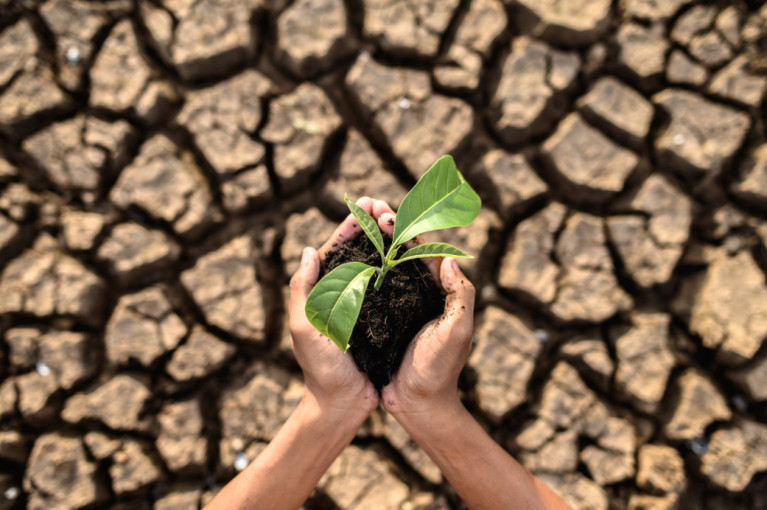
Indonesia continues to face serious environmental degradation. Deforestation, forest conversion, natural resource exploitation, and the increasing frequency of floods and landslides all indicate that pressure on natural ecosystems persists across many parts of the country. In response to these conditions, a Faculty of Philosophy lecturer at Universitas Gadjah Mada, Dr. Arqom Kuswanjono, S.Ag., M.A., argued that today’s environmental crisis should not be understood merely as a natural phenomenon but also as a moral crisis caused by human behavior.
Dr. Arqom first distinguished between natural events and moral disasters. According to him, earthquakes, volcanic eruptions, and other natural phenomena are fundamental to Earth’s natural processes. They become disasters only when they result in human casualties or material losses. In contrast, ecological destruction caused by human actions is more accurately described as a moral disaster.
“A moral disaster is one caused by human behavior. Floods, landslides, and various forms of environmental degradation are influenced by natural factors, but they also involve moral issues. Driven by greed, humans continue to destroy nature,” he said during an interview at the UGM Faculty of Philosophy on Friday (Jul. 10).
According to the Religion lecturer in the Department of Philosophy, the root cause of the environmental crisis lies in human greed. In pursuit of economic gain and other interests, people exploit nature without considering the ecological balance maintained through the laws of nature. In reality, he explained, nature has its own mechanisms for sustaining itself.
“Nature is actually capable of regulating itself through natural laws. When humans intervene as though they have absolute control over nature and attempt to manipulate it without respecting those laws, environmental destruction occurs,” he emphasized.
Humans, Arqom continued, are rarely satisfied with what they already possess. The constant drive for greater profit and the fulfillment of endless desires encourages excessive exploitation of natural resources without regard for environmental consequences. Yet, he noted, nature has provided sufficient resources to meet humanity’s needs when managed wisely.
“The Earth provides enough to satisfy every person’s needs, but not every person’s greed,” he said, quoting Mahatma Gandhi.
From a theological perspective, Arqom also believes many people misunderstand religious teachings that place humans in a privileged position among God’s creations. According to him, this position is not a license to dominate or exploit nature but a mandate to protect and preserve it. He cited the Islamic concept of humans as khalifah, or God’s stewards on Earth.
“Human beings should emulate God’s attributes of compassion and mercy. Having dominion over nature does not mean having the freedom to destroy it. Humans are entrusted with authority over birds, forests, and the Earth not to exploit them, but to care for them,” he explained.
Arqom further argued that environmental protection must begin with a philosophical awareness of humanity’s place within nature. From an ontological perspective, humans must recognize that they are part of nature rather than rulers free to exploit it. This awareness then becomes the foundation for an epistemological approach that shapes ways of thinking, knowledge, and consciousness about the relationship between humans and the natural world through education, curricula, and various forms of learning. Ultimately, he added, the process must culminate in axiology through the development of ethics and moral responsibility for environmental protection.
“Ontology gives rise to epistemology. Once we understand humanity’s place within nature, we can develop knowledge and awareness that ultimately foster a sense of responsibility toward the environment,” he said.
Arqom also highlighted the paradox that advances in science and technology do not necessarily lead to stronger environmental awareness. He observed that many forms of environmental exploitation, including deforestation, industrial expansion, and other activities that generate pollution and accelerate climate change, are often justified in the name of development and technological progress. For this reason, he believes modern society has much to learn from Indigenous communities, which continue to regard nature as an inseparable part of life.
“Sometimes we need to learn from Indigenous communities. They show greater respect for nature. What we should learn from them is not their mythology but their reverence for the natural world,” he said.
Concluding his remarks, Arqom urged the public to adopt a new perspective on nature. Rather than treating it as an inheritance to be exploited freely, he argued that nature should be regarded as a trust held for future generations that must be protected, preserved, and, whenever possible, passed on in better condition. Such a perspective, he said, would help people recognize that environmental degradation ultimately threatens not only the natural world but also humanity’s own survival.
“When nature is destroyed, it is not only nature that suffers; humanity suffers as well. The Earth is a trust for our children and grandchildren, not an inheritance for us to exhaust,” he concluded.
Author: Agito Sitepu
Editor: Gusti Grehenson
Post-editor: Zabrina Kumara
Photo: Magnific