


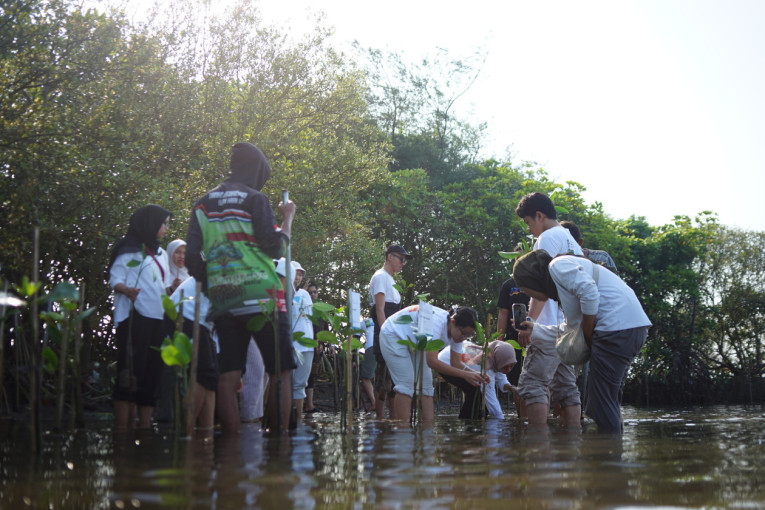
Alumni and students of Universitas Gadjah Mada (UGM) affiliated with the Indonesian Sustainable Initiatives Foundation (Insive) carried out a series of coastal ecosystem conservation and restoration activities in Bantul, Special Region of Yogyakarta (DIY), on June 4-5, 2026. The two-day program was organized to commemorate World Environment Day and to provide a tangible response to the threats posed by plastic pollution along coastlines and the decline of protected marine species.
The program centered on three main pillars of action: the release of olive ridley sea turtle hatchlings, beach cleanup activities, and collaborative mangrove planting. The Insive Foundation emphasized that environmental concern should not remain at the level of discourse but must be translated into consistent, measurable action.
One of the most heartwarming moments was the release of 20 olive ridley sea turtle hatchlings, a protected species, into their natural habitat at Goa Cemara Beach. Using coconut shells as protective containers, participants carefully released the hatchlings one by one toward the open sea. Aldina Himmarila M., an alumna of Biology UGM and Program Manager of the Insive Foundation, stated that the activity served as both a symbol of hope and a reminder that protecting marine wildlife requires sustained multi-stakeholder collaboration.
“This activity represents a tangible form of action and demonstrates the younger generation’s commitment to preserving coastal ecosystems,” she said.
The Insive Foundation also organized a beach cleanup campaign at Baros Beach to reduce the impact of inorganic waste in coastal areas. During the activity, participants collected a total of 300 kilograms of waste, primarily consisting of single-use plastics, Styrofoam, disposable diapers, and other non-organic materials. All collected waste was subsequently handed over to the Baros Beach management for processing and recycling. The 300 kilograms of waste collected reflect the significant pressure that marine debris places on Bantul’s coastal ecosystem every day.

As the culmination of the program, the Insive Foundation, in collaboration with the Baros Forest Farmer Group (KTH Baros), planted 100 mangrove seedlings at Baros Beach. Mangroves serve as natural barriers against coastal abrasion and erosion and provide critical habitats for fish, shrimp, crabs, and coastal birds. They also create opportunities for ecotourism that can improve the welfare of local communities.
Amid the growing threat of global sea-level rise, this planting initiative represents a long-term ecological investment whose benefits will be experienced by future generations.
“The planted mangroves are expected to grow optimally, absorb and store carbon over the long term, and contribute to reducing atmospheric CO₂ levels,” she said.
Through the integration of these three pillars of action, the Insive Foundation reaffirmed that the essence of World Environment Day lies in sustained, concrete action rather than annual ceremonial observances. The synergy between alumni and students facilitated by the foundation is expected to continue to grow as a model of youth collaboration oriented toward sustainability. Through consistent efforts such as these, meaningful contributions to the restoration of Indonesia’s coastal ecosystems can continue to expand.
Reporter/Photos: Azarine Malika Zayyan
Author: Triya Andriyani
Post-editor: Jasmine Ferdian