


Indonesia is believed to be facing multiple challenges across the economic, political, and democratic spheres, reflected in pressures on civil liberties and a shrinking space for public sovereignty. Marginalization is also evident in global political-economic relations shaped by hegemonic forces that create structural dependency. On the one hand, misguided policies have weakened national sovereignty; on the other hand, criticism from civil society is often viewed with suspicion and framed as serving foreign interests.
“This condition cannot be taken lightly because it actually allows us to assess and diagnose the level of crisis we are facing,” said UGM sociologist Dr. Arie Sujito during his Epistemology Oration titled “Epistemic Freedom as a Pillar for Educating the Nation,” held Thursday (2/26) at the University Club UGM.
Arie also highlighted the decline of the public sphere, which is increasingly dominated by shallow gossip and low-quality discourse, while fundamental issues such as environmental degradation, human rights violations, and social inequality are sidelined. He described this situation as a discourse that is “growing increasingly polluted” and in need of interruption by the university, a vital element of civil society.
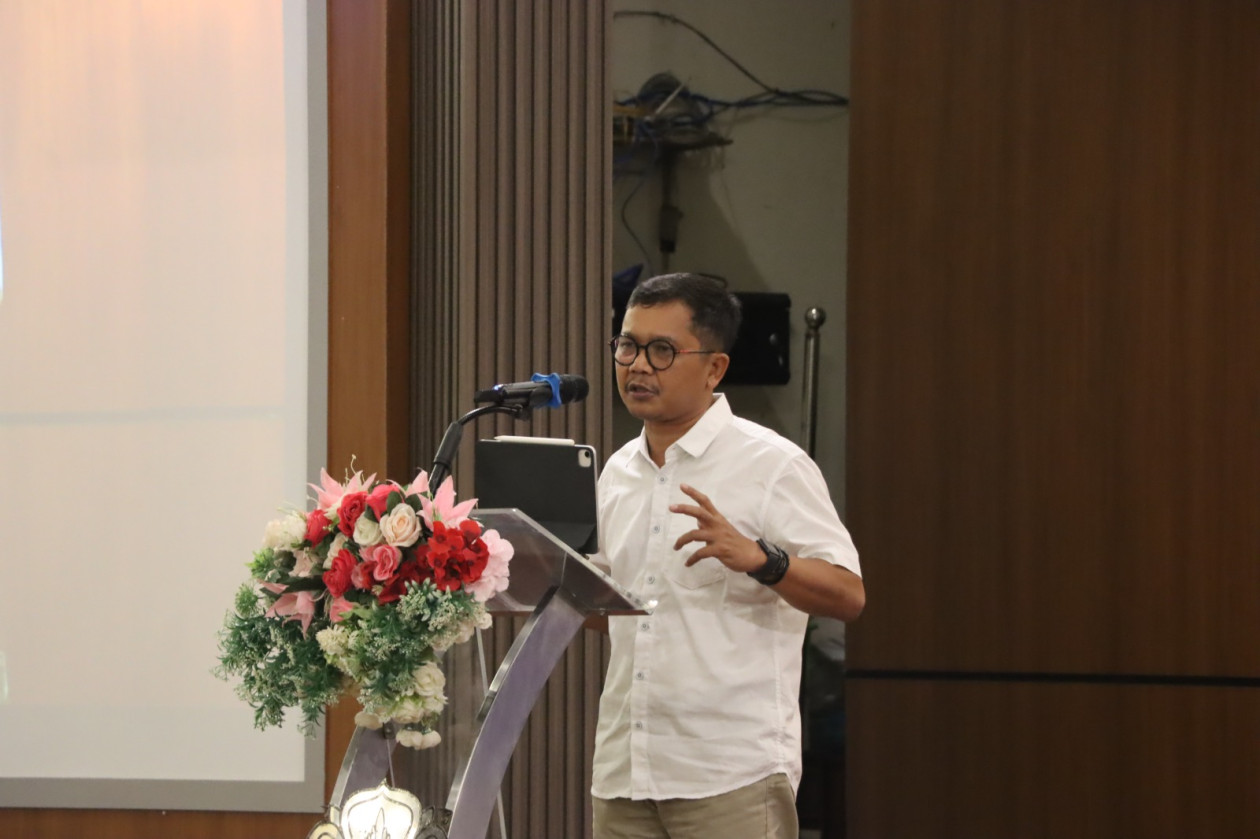
Furthermore, he called for a “radical break,” or radical deconstruction, of the epistemology of post-reform movement politics. This reflection, he explained, is not intended to romanticize the Reformasi era of 1998, but to assess both the achievements and setbacks of democracy over more than two decades.
“There is a paradoxical reality in which civil society movements are becoming more militant against the trend of autocracy, yet at the same time those in power are increasingly resistant to public criticism,” he stated.
Arie reminded the audience that political liberalism is often positioned as the sole guiding principle without sufficient balance. Therefore, academics and public activists should remain critical of both global imperial propaganda and national oligarchies that risk dividing the people’s unity. He emphasized the importance of multiplying movements for political emancipation among the people.
In addition, Arie underscored the dangers of growing international dependency that increasingly dictates national policies. According to him, this condition serves as a serious warning for the nation to once again engage in substantive discussions on freedom, democracy, autonomy, and sovereignty in real practice, not merely as rhetorical slogans.
At the conclusion of his oration, Arie affirmed that epistemic freedom is rooted in historical awareness and in understanding capitalism and imperialism as systems that continually mutate. He referred to the ideals of Soekarno, who envisioned independence not only in physical terms but also in knowledge. He expressed hope that the struggle would lead to substantive democracy marked by freedom of expression.
“Our way of appreciating history and critically assessing the present will ensure that future generations do not blame this generation for its failures and lack of responsibility,” he said with hope.
For Dr. Sujito, freedom of expression today is not merely formal academic freedom, but a space for the emergence of creative, intelligent, and independent subjects. Knowledge is not simply an accumulation of theory, but the product of life’s struggles, imbued with values and meaning. With resilience and the capacity to survive, the nation will be able to stand on its own and free itself from coercion, exploitation, and new forms of colonization.
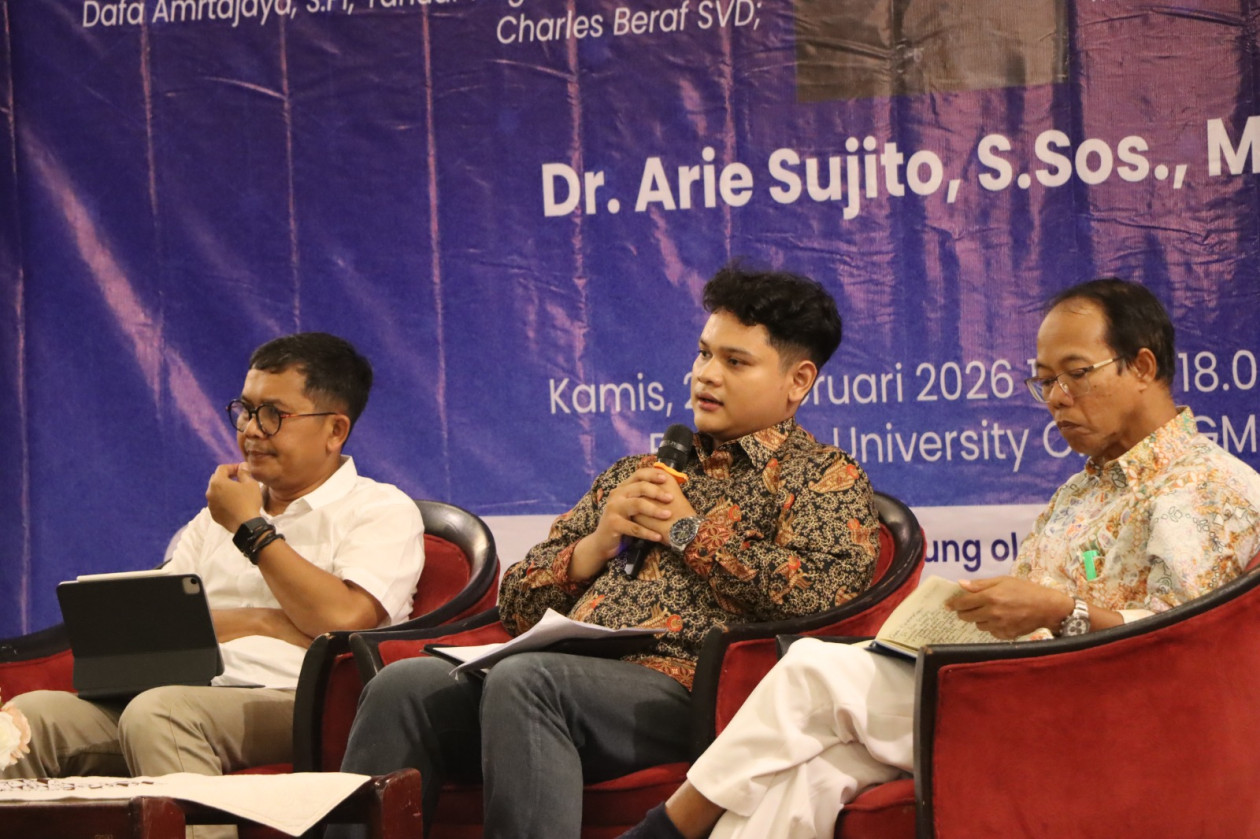
Representing the voice of youth, Panji Dafa Amrtajaya from Forum 2045 stated that epistemic independence is not merely a dichotomy between Western and local knowledge, but rather the recognition of knowledge born of lived experience, ecological relationships, and communal practices.
“The experiences of farmers reading weather patterns, fishermen observing wind directions, or indigenous communities safeguarding forests are often reduced to mere data,” he remarked.
Chair of the UGM Board of Professors (DGB UGM), Professor M. Baiquni, reminded participants of the importance of rebuilding the cultural roots of scholarship and local wisdom as foundations for educating the nation.
“Clearly, the digital world will transform many of the systems and cultural patterns within our nation,” he added.
Meanwhile, Dean of the UGM Faculty of Philosophy (Philosophy UGM), Professor Rr. Siti Murtiningsih noted that Indonesia’s democratic decline cannot be separated from the weakening of universities’ critical capacity.
She highlighted new forms of coloniality in higher education through campus neoliberalism, the platformization of education, and the expansion of artificial intelligence, which may create epistemic dependency.
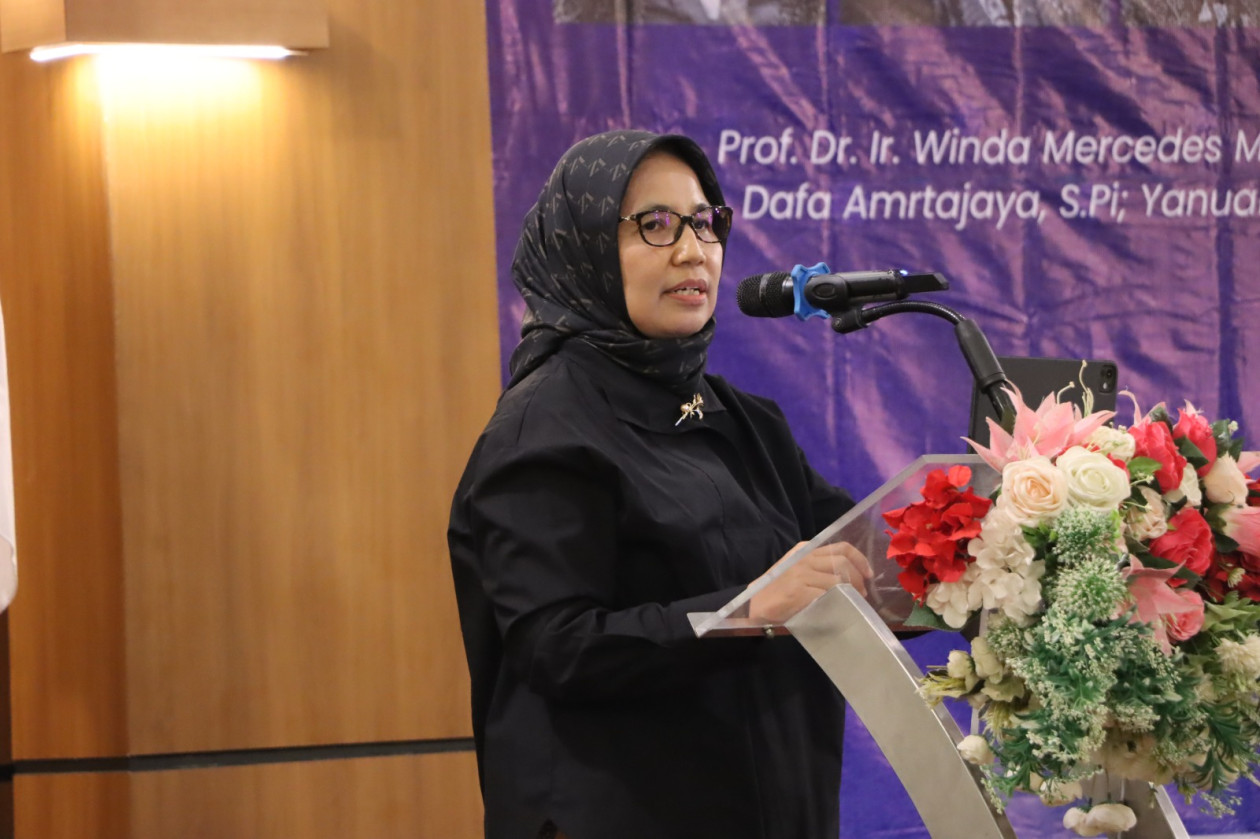
This concern was echoed by the Secretary of DGB UGM, Professor Wahyudi Kumorotomo, who warned that digital technology has the potential to control discourse. Human beings may no longer be colonized physically, but through algorithms and the distribution of information.
“If digital technology is not truly directed as a tool for knowledge, it can become an instrument that dictates or controls discourse,” he stated.
Other responses were delivered by Professor Winda Mercedes Mingkid from Universitas Sam Ratulangi, Yanuar Nugroho, Ph.D. from Nalar Institute, Romo Charle Beraf SVD, sociologist at the Institut Filsafat dan Teknologi Kreatif, and Sudirman Said, Rector of Universitas Harkat Negeri Tegal.
The event was initiated by Forum 2045 in collaboration with the UGM Faculty of Agriculture (Agriculture UGM), the Faculty of Agriculture at Universitas Brawijaya, and Desanomia, and was supported by various universities and cross-regional communities as a space for reflection on the crises of knowledge, democracy, and national sovereignty amid the currents of digital globalization.
Author: Hanifah
Editor: Gusti Grehenson
Post-editor: Zabrina Kumara
Photo: Jesi