SDG 12: Responsible Consumption and Production
UGM economist warns Indonesia’s shrinking middle class signals fragile job quality and stalled social mobility.
UGM Rector and Ustaz Wijayanto urge social compassion at the Ramadan 2026 campus opening event.
UGM experts propose replacing the “UPF” term with “processed food” to avoid public confusion in Indonesia’s MBG program.
UGM trains 112 health cadres to support breast cancer patients and improve community-based care.
UGM Campus Mosque hosts Ramadan on Campus, offering lectures and 2,000 free iftar and suhoor meals daily.
UGM lecturers explain that coffee antidiabetic compounds may affect blood sugar but cannot replace diabetes therapy, stressing wise, moderate consumption.
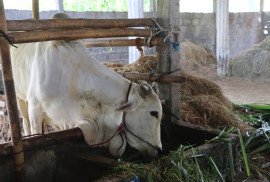
UGM’s Faculty of Veterinary Medicine received 40 cattle from industry partners to support education, research, and student competencies.
Coordinating Minister Airlangga Hartarto highlights industrial downstreaming, food security, and human resources as engines of growth.
UGM economist urges stronger financial governance to curb Indonesia’s shadow economy and prevent tax leakages.
UGM researchers develop AI-based smart agriculture and undersea security detection systems.
UGM KKN students help develop Kledung Village’s coffee potential in Pacitan as a sustainable and high-value local commodity.
Indonesia’s vast biodiversity faces major threats, prompting UGM and BRIN to call for stronger, coordinated national biodiversity research.
A UGM lecturer highlights the water–energy–food nexus as a key approach to sustaining agricultural productivity amid growing global pressures.
UGM’s Center for Transportation and Logistics launches a Low Emission Zone initiative in Jeron Beteng to support climate targets and heritage protection.
UGM and Kulon Progo Regency strengthen farmer-scale smart agriculture through FASTAN, integrating IoT-based greenhouses and applied research.
UGM researcher transforms geothermal silica into nanosilica to boost crop yields and support sustainable agriculture and green technology.
UGM forestry expert urges firm regulation of concession holders after the government revoked permits of 28 companies for environmental violations.
A UGM lecturer has developed a rapid, eco-friendly tool for detecting food safety and authenticity, earning international recognition through the Hitachi Award.
UGM Professor Ani Widiastuti teaches adaptive agriculture at Ibaraki University through a cross-appointment, strengthening international academic collaboration.
Intensifying tourism development in Gunung Sewu is raising concerns over karst damage, water security, and long-term community sustainability.
UGM students win a Gold Medal at I2ASPO for developing low-cost carbon capture technology using PET plastic waste and zeolite materials.
A UGM doctoral student joins academic programs at NTUA, Greece, to strengthen international research collaboration in waste management and sustainability.
UGM academics highlight the importance of social approaches in forest management to strengthen climate mitigation, disaster resilience, and community welfare.
Premium hydroponic melon research supports sand-land farmers, boosts productivity, and develops value-added products for food resilience.
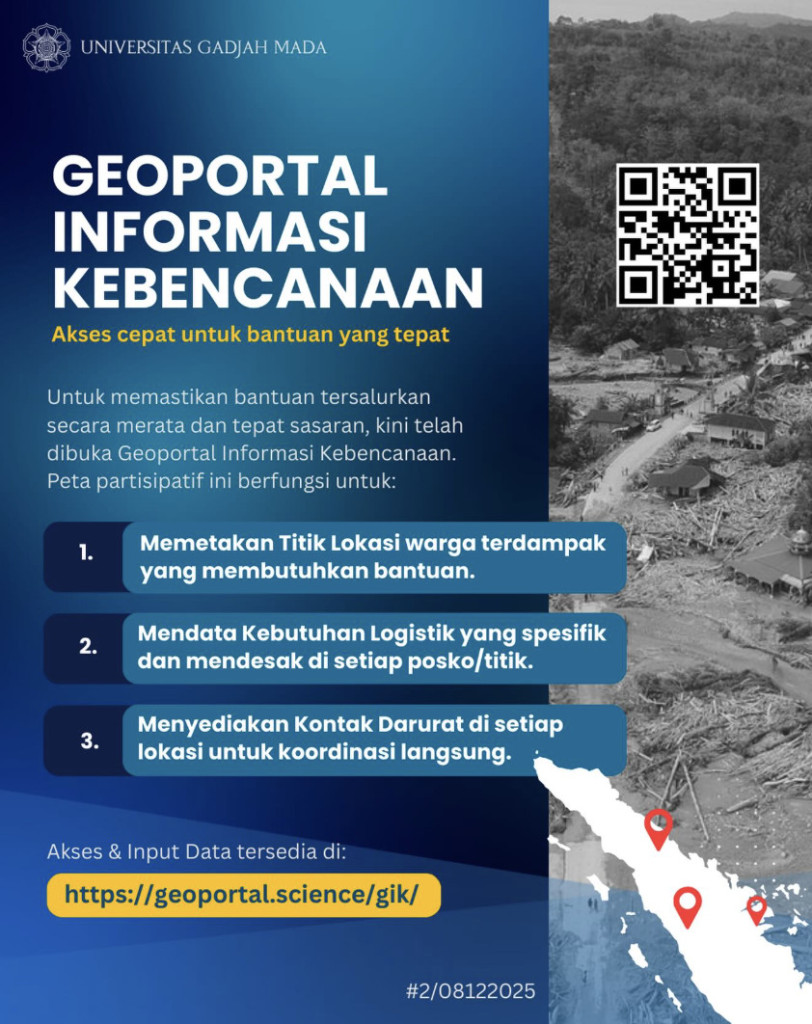
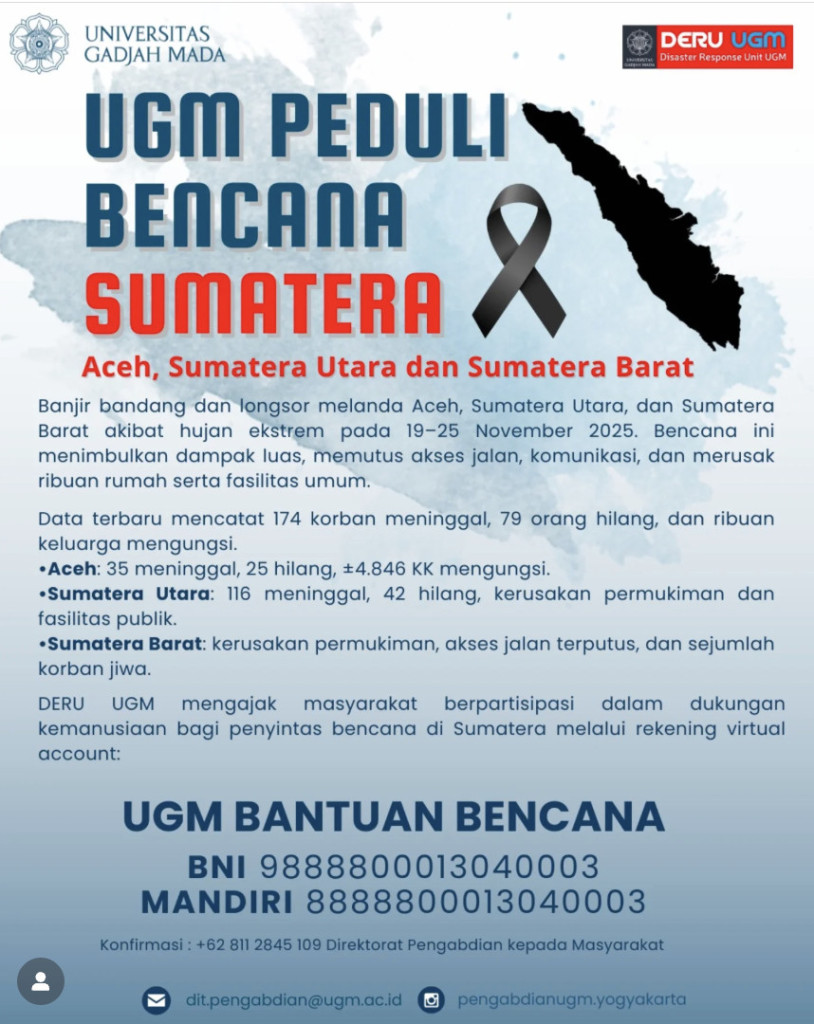
UGM expert calls for vegetative rehabilitation and agroforestry after watershed degradation triggered deadly flash floods in parts of Sumatra.
UGM researchers develop a geomembrane-based irrigation system to improve water efficiency and boost rice productivity in dryland areas such as Gunungkidul.
TEP UGM presents evidence-based findings on the potential of 14 transmigration areas to support inclusive and sustainable development.
Rising Hydrometeorological Disasters Signal Urgent Need to Accelerate Reforestation, Says UGM Expert
Amid rising hydrometeorological disasters, a UGM forestry expert urges Indonesia to curb deforestation and accelerate reforestation efforts.
Central obesity is not merely excess weight. A UGM nutrition expert explains the serious health risks and how to prevent them.
Applying Indonesian National Standards (SNI) helps MSMEs improve quality, gain consumer trust, expand markets, and strengthen global competitiveness.